Swiss Ball vs. BOSU Exercise Balls: What's the Difference?

For decades, exercise balls have been a key part of fitness, rehabilitation, and wellness programs. You might know them as exercise balls, stability balls, workout balls, or Swiss balls, but whatever you call them, these versatile tools can help improve core strength, balance, mobility and overall movement quality. Many people also use exercise balls to help with their posture and reduce back pain by strengthening the muscles that support the spine.
They're also fun and unique - unlike traditional strength equipment, exercise balls introduce an element of instability that can make workouts more engaging and challeng the body in new ways.
If you're shopping for an exercise ball, you’ll likely come across both Swiss Ball® products and BOSU Exercise Balls. While they serve many of the same purposes, there are a few differences worth considering before making a purchase.
What Is a Swiss Ball?
Swiss Ball is one of the most recognized brands in the exercise ball category and is often associated with stability training, rehabilitation and functional fitness. The company offers a range of professional-quality exercise balls designed to support strength training, balance work, stretching and mobility exercises.
Like many exercise balls, Swiss Ball products can be used for core workouts, flexibility training, physical therapy exercises and active sitting.
What Is a BOSU Exercise Ball?
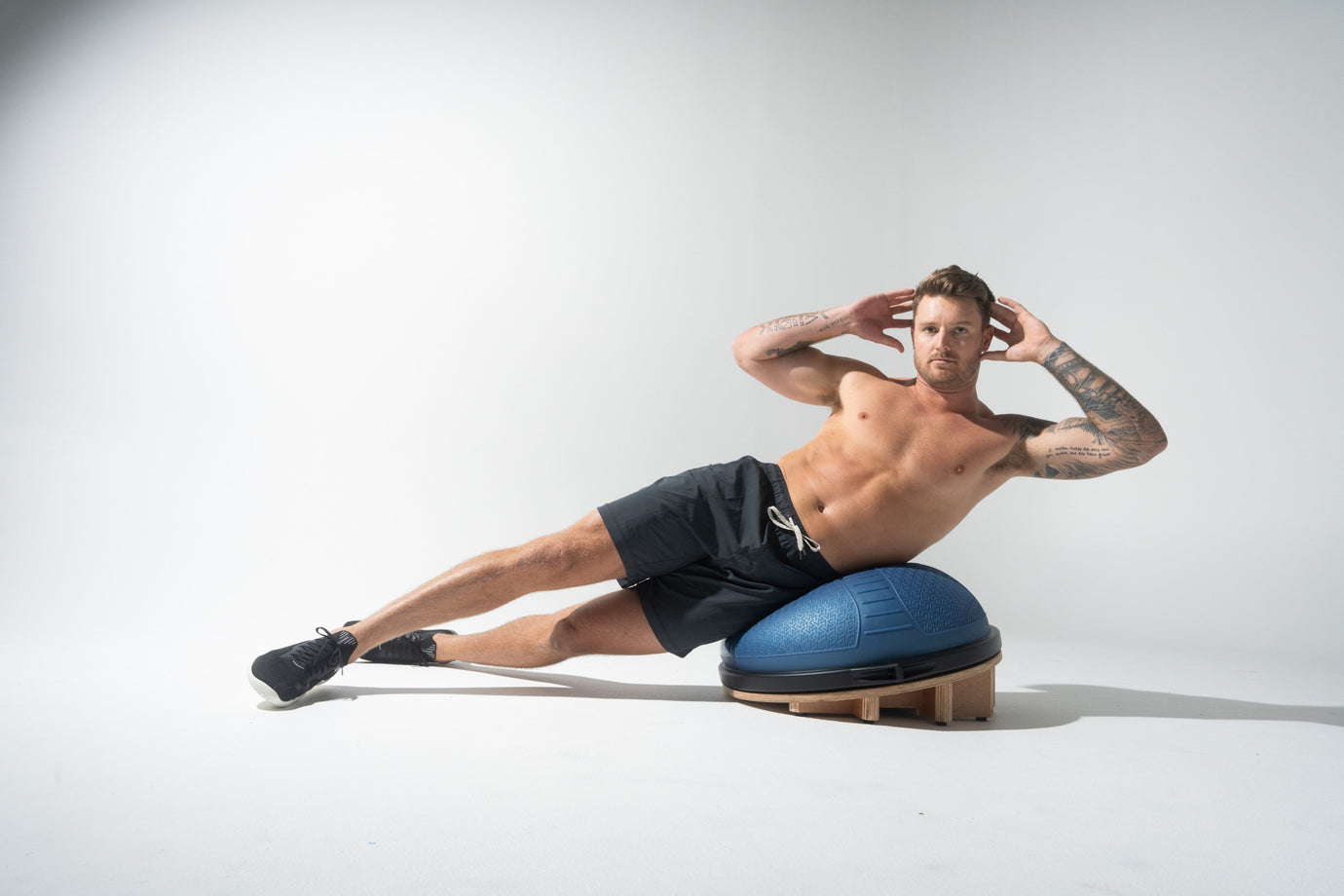
BOSU also offers a line of exercise balls designed for strength, mobility and stability training.
BOSU Exercise Balls feature burst-resistant construction designed to withstand up to 1,000 pounds of pressure, along with a textured, anti-slip surface to improve stability during workouts.
Similarities Between Swiss Ball and BOSU Exercise Balls
- Both Swiss Ball and BOSU Exercise Balls can be used for:
- Core strengthening exercises
- Balance and stability training
- Mobility and flexibility work
- Stretching and recovery
- Rehabilitation and corrective exercise
- Home workouts and commercial fitness settings
- Active sitting and posture improvement
- Back pain prevention and posture-focused exercises
One of the biggest benefits of using an exercise ball is that it naturally engages your core. Because the surface is unstable, your body must work harder to maintain balance throughout each movement. That extra muscle engagement can help strengthen the muscles that support your back, improve posture and build better overall stability.
Key Factors to Consider:
Durability
When choosing an exercise ball, durability should be one of the first considerations. Look for high-quality materials, burst-resistant construction and weight capacity specifications that align with your intended use.
Surface Texture
Surface texture can impact grip, which gives you more control during exercise. A textured surface may help reduce slipping during strength, mobility and balance exercises.
Intended Environment
Some exercise balls are designed for home use, while others are stronger and can handle the demands of gyms, studios and rehabilitation clinics.
Which Exercise Ball Is Right for You?
The best exercise ball is the one that matches your training goals, body size and workout environment.
If you're looking for a versatile tool to improve balance, strengthen your core, support mobility work, help reduce back pain or add instability to traditional exercises, both Swiss Ball and BOSU Exercise Balls are good options. When it comes to fitness gear, don't just go for the cheapest one. Make sure it's well-made, the right size for you, and can withstand regular use.
Frequently Asked Questions:
Is a Swiss Ball the same as an exercise ball?
A Swiss Ball is a brand of exercise ball. Exercise balls are also commonly referred to as stability balls, fitness balls, balance balls or workout balls.
What size exercise ball should I use?
Most adults use a 65 cm exercise ball, depending on their height. Those 5'4" and under may find a 55 cm exercise ball more comfortable. When seated on the ball, your knees should generally be positioned at approximately 90 degrees.
Can exercise balls help improve core strength?
Yes. Because exercise balls create an unstable surface, they require the core and stabilizing muscles to remain engaged during movements.
Can an exercise ball help with back pain?
Exercise balls can be an effective tool for improving core strength, posture and spinal stability. Strengthening the muscles that support the spine may help reduce back discomfort and improve overall movement quality. Many physical therapists and fitness professionals incorporate exercise ball exercises into rehabilitation and corrective exercise programs.
What makes BOSU Exercise Balls different?
BOSU Exercise Balls feature burst-resistant construction rated up to 1,000 pounds of pressure and a textured, anti-slip surface designed to improve grip and stability during exercise. The textured surface can be beneficial during strength training, balance exercises, stretching and rehabilitation movements where control is important.
Why are exercise balls becoming popular in recovery and wellness programs?
As recovery and wellness continue to gain importance, many professionals are incorporating exercise balls into mobility, stretching and corrective exercise programs. Exercise balls provide a low-impact way to improve balance, posture, flexibility and core strength while supporting healthy movement patterns. Their versatility makes them a valuable tool for both fitness and recovery-focused routines.